Flakes on a curly-haired scalp are one of the most misunderstood scalp concerns in Indian hair care. They are often dismissed as dandruff and treated with harsh anti-dandruff shampoos that strip the scalp of natural oils, making the underlying problem worse rather than better. Or they are ignored entirely, with the assumption that curly hair is simply prone to flakiness and nothing can be done about it. Neither response addresses what is actually happening at the scalp, and neither delivers lasting results.
The truth is that flakes in curly hair have specific causes that are different from the causes of flakes in straight hair, and they respond to specific solutions that are designed for how curly hair actually behaves. This guide by The Curl Co. covers everything you need to know about managing flakes in curly hair, from understanding what is causing them to building a routine that keeps the scalp clear consistently.
Why Curly Hair Is More Prone to Scalp Flakes

The structure of curly hair creates specific conditions at the scalp that make flakes more likely than in straight hair. The curl pattern means that natural scalp oils, which in straight hair travel relatively easily down the hair shaft, struggle to distribute beyond the root area in curly hair. The scalp can produce oil normally, but the oil does not spread, which can leave the scalp in a state where it is both producing oil and experiencing surface dryness simultaneously.
This paradox, an oily scalp surface with a dry scalp underneath, is one of the most common sources of flakes in curly hair and one of the most frequently misdiagnosed. Women who see flakes assume their scalp is dry and apply oils directly to the scalp, which can worsen the problem by adding more surface oil to an already congested scalp. Or they assume the flakes are dandruff and use medicated shampoos that strip the scalp further.
Indian environmental conditions compound these structural challenges. Hard water, which is present in most Indian cities, leaves mineral deposits on the scalp that block the hair follicle and irritate the scalp surface. Monsoon humidity creates conditions where the scalp is humid externally but dried out by the increased washing many women do during the season. Summer heat increases scalp oil production and sweating, which creates a different set of conditions for flake formation. Understanding which condition is creating your specific flakes is the first step toward addressing them correctly.
The Main Causes of Flakes in Curly Hair
Dry scalp is the most common cause of flakes in curly hair. Dry scalp flakes are typically small, white, and powdery, and they often feel itchy. The scalp feels tight and uncomfortable, particularly after washing. Dry scalp flakes are caused by insufficient moisture at the scalp level, which in curly hair is often the result of sulphate-heavy shampoos stripping too much natural oil during washing.
Product build-up creates a different kind of flaking that is often confused with dandruff. When styling products, oils, and conditioners accumulate on the scalp without being properly cleansed, they create a layer that can flake off in larger, more irregular pieces than dry scalp flakes. Product build-up flakes are often yellowish or waxy rather than white and powdery, and they may have a slight smell. This type of flaking is common in curly hair routines that use heavy products or oil the scalp frequently.
Dandruff, which is caused by an overgrowth of Malassezia yeast on the scalp, creates larger, oilier flakes that are often accompanied by itching and redness. Dandruff is a fungal condition that requires consistent management rather than a one-time treatment, and it is aggravated by humidity, stress, and irregular washing schedules.
Hard water mineral deposits are an underrecognised cause of scalp irritation and flaking in India. The calcium and magnesium minerals left on the scalp by hard water interfere with the scalp's natural oil balance and can cause both dryness and irritation that leads to flaking.
The Right Cleansing Approach for a Flake-Free Scalp

The foundation of flake management in curly hair is cleansing that is thorough enough to remove build-up and mineral deposits without stripping the natural oils that the scalp needs to function correctly. This is the core challenge, and it is why most conventional anti-dandruff shampoos fail for curly hair: they cleanse aggressively but strip the scalp, which triggers compensatory oil production and creates a cycle of oiliness and flaking that never fully resolves.
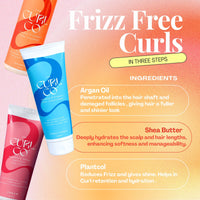
The Curl Co.'s Cleanse and Hydrate Curl Shampoo uses gentle surfactants that lift product build-up, pollution, and mineral deposits from the scalp without stripping the natural oil layer that keeps the scalp balanced. A thorough scalp massage during shampooing, using the fingertips rather than the nails, increases circulation and ensures the cleanser reaches every part of the scalp without relying on the length of the hair to distribute it.
Wash frequency matters as much as the product used. Most Indian curly-haired women with flaky scalps do best washing every five to seven days. Washing more frequently, which is a common response to visible flakes, strips the scalp faster than it can recover and often worsens the flaking rather than reducing it.
Conditioning and Scalp Moisture

After cleansing, conditioning the hair length while keeping the conditioner off the scalp is essential for curly hair with a flake-prone scalp. Conditioner applied directly to the scalp can add to product build-up and create the kind of residue that eventually flakes.
The Curl Co.'s Nourish and Hydrate Curl Conditioner applied from mid-lengths to ends provides the deep hydration that curly hair needs at the length without adding weight or residue at the scalp. This distinction, conditioning the length rather than the scalp, is one of the most impactful adjustments curly-haired women with scalp flakes can make to their routine.
Styling Products and Scalp Build-Up

The styling products used on curly hair can either contribute to scalp flaking or remain neutral, depending on their formulation and how they are applied.
Heavy oils applied directly to the scalp, which is a traditional practice in many Indian households, can contribute to build-up flaking when the oil is not properly cleansed at the next wash. Lightweight oils used as a pre-wash treatment on the length rather than the scalp are significantly less likely to contribute to scalp build-up.
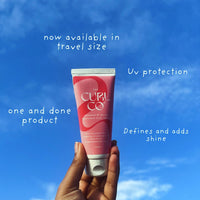
The Curl Co.'s Enhance and Define Softhold Curl Cream and Volumize and Defining Gel for Hydrating Curl are applied from mid-lengths to ends rather than at the scalp, which means they contribute to styling definition without adding to scalp build-up. Applying styling products from the mid-length downward rather than from the root is one of the most practical adjustments available to curly-haired women managing scalp flakes.
Scalp Care Between Wash Days
Between wash days, the scalp continues to produce oil and accumulate environmental pollutants. For curly-haired women with flake-prone scalps, managing the scalp between washes without disturbing the curl pattern requires a light touch.
A few drops of diluted tea tree oil applied to the scalp between washes has antifungal properties that can help manage Malassezia-related dandruff without requiring a full wash. Tea tree oil should always be diluted in a carrier oil at approximately a 5% concentration before scalp application, as undiluted tea tree oil can irritate the scalp.
The Curl Co.'s Frizz Control and Shine Hair Serum applied to the mid-lengths and ends between washes maintains the styling result without adding anything to the scalp area, which keeps the scalp clear of additional product between wash days.
Sleeping on a satin or silk pillowcase reduces the friction that can irritate a sensitive scalp overnight and helps maintain the moisture balance that a flake-prone scalp needs.
When to Seek Additional Help
Most scalp flaking in curly hair responds to the routine adjustments described above within four to eight weeks of consistent practice. If flaking persists despite consistent sulphate-free cleansing, correct product application, and appropriate wash frequency, a dermatologist consultation is worth pursuing.
Persistent, thick, adherent flakes that do not respond to gentle cleansing may indicate seborrhoeic dermatitis, a more significant inflammatory scalp condition that requires medicated treatment. Flakes accompanied by significant redness, burning, or hair loss also warrant professional assessment rather than routine management.
For a broader understanding of curly hair damage and how to prevent it, read The Curl Co.'s guide on curly hair damage 101 for Indian curls.
FAQs
1. What causes flakes in curly hair?
Flakes in curly hair are most commonly caused by dry scalp from sulphate-heavy cleansing, product build-up from heavy styling products or scalp oiling, dandruff from Malassezia yeast overgrowth, or hard water mineral deposits. Each type of flaking has different characteristics and requires a different approach to resolve.
2. How often should I wash curly hair to manage scalp flakes?
Most Indian curly-haired women with flaky scalps do best washing every five to seven days with a sulphate-free shampoo. Washing more frequently strips the scalp and often worsens flaking. Between washes, avoid applying heavy products directly to the scalp.
3. Can conditioner cause scalp flakes in curly hair?
Yes, if applied directly to the scalp. Conditioner applied at the scalp adds to product build-up that can eventually flake. Apply conditioner from mid-lengths to ends only, keeping it away from the scalp, to provide hair hydration without contributing to scalp residue.
4. Is dandruff the same as dry scalp flakes in curly hair?
No. Dry scalp flakes are small, white, and powdery, caused by insufficient scalp moisture. Dandruff flakes are larger, oilier, and often yellowish, caused by Malassezia yeast overgrowth. Dandruff is often accompanied by itching and redness. Both are common in curly hair but require different treatment approaches.
5. Does hard water cause scalp flakes?
Yes. Hard water leaves calcium and magnesium mineral deposits on the scalp that irritate the scalp surface and interfere with its natural oil balance. In most Indian cities where hard water is common, these deposits contribute to scalp flaking and are worth addressing through periodic clarifying washes.
6. Where can I find scalp-friendly products for curly hair in India?
The Curl Co. offers a range of CG-friendly products designed for Indian curl types and Indian scalp conditions. Explore the complete product range for sulphate-free cleansing, deep conditioning, and lightweight styling products that support scalp health alongside curl definition.
Final Word
Flakes in curly hair are not inevitable, and they are not permanent. They are the result of specific conditions at the scalp that respond to specific adjustments in cleansing, conditioning, and product application. Understanding what is causing your particular flaking, whether dry scalp, build-up, dandruff, or hard water, is the first step toward addressing it correctly.
At The Curl Co., every product in our range is designed to support both scalp health and curl definition because we understand that a healthy scalp is the foundation of healthy curls. The two cannot be separated, and caring for one means caring for both.