Most Indian curly-haired women have had the same experience. You wash your hair carefully, style it with your usual products, and step out looking exactly the way you hoped. Then the weather happens. Within an hour, the definition is gone, the volume has doubled in all the wrong directions, and the frizz you spent twenty minutes fighting has come back stronger than before.
Here is what nobody tells you clearly: frizz is not your hair misbehaving. Frizz is your hair communicating. It is telling you that something in your routine, your environment, or your product choices is not quite working for your specific curl type. Once you understand what frizz actually is and why it happens, fixing it becomes significantly more straightforward. This guide by The Curl Co. covers the real causes of frizz in Indian curly hair and the routine changes that create lasting results.
What Frizz Actually Is

Frizz is not a hair type and it is not a personality trait your hair was born with. It is a structural response. Each strand of curly hair is covered by a cuticle layer, which is made up of overlapping scales that ideally lie flat and sealed, keeping moisture in and keeping external humidity out. When those cuticle scales are raised, which happens when the hair is dehydrated, damaged, or exposed to humidity, moisture from the atmosphere enters the strand unevenly, causing it to swell and create the fuzzy, undefined look that most people call frizz.
This is why frizz is almost always a sign of dehydration, not damage. Your hair is not broken. It is thirsty. And it is pulling moisture from wherever it can find it, including the air around you.
Why Indian Weather Makes Frizz Worse
If your curls frizz more in India than they did elsewhere, or more in Mumbai than in Delhi, or more in July than in January, the weather is doing exactly what it does to porous, textured hair.
During monsoon, humidity levels in coastal Indian cities regularly exceed 90%. At that humidity, even well-hydrated curls with sealed cuticles are fighting against atmospheric pressure. For curls that are even slightly dehydrated, the result is immediate and dramatic frizz.
Indian summers create the opposite problem. Heat above 40 degrees Celsius dries curls out faster than in cooler climates, which means the cuticle scales open from dryness rather than humidity, and then both dryness and any ambient moisture create frizz together.
Hard water, which is present in most Indian cities, adds another layer. The mineral deposits left by hard water on the hair strand interfere with how conditioning products work, reducing their ability to hydrate and seal the cuticle effectively.
The Most Common Reasons Indian Curls Get Frizzy
Understanding what is actually causing your specific frizz helps you address it correctly rather than treating symptoms without fixing the root cause.
Insufficient hydration is the leading cause. Curly hair loses moisture faster than straight hair because of its structure, and most Indian women were not taught to prioritise water-based hydration for their curls growing up. Applying oil is not the same as hydrating. Water-based leave-ins, conditioners, and curl creams provide the hydration that curly hair actually needs, while oil seals that hydration in.
Using sulphate-based shampoos strips the natural oils from the hair shaft along with dirt and product residue. This leaves the cuticle rough and open, which makes the hair significantly more prone to frizz between wash days. Switching to a sulphate-free cleanser is one of the single most impactful changes a curly-haired woman can make.
Applying styling products on damp hair rather than soaking wet hair is another common cause of frizz that is easy to fix once you know about it. Products distribute unevenly through damp hair, creating inconsistent coverage and leaving parts of the strand unprotected. The same amount of product applied to dripping wet hair distributes evenly and creates much better definition and frizz control.
Touching or scrunching hair while it dries disrupts the curl cast that forms as the styling products set. This disruption introduces frizz into the pattern before it has had a chance to set properly. Once styled, hair should be left completely undisturbed until it is fully dry.
Sleeping on a cotton pillowcase absorbs moisture from the hair shaft overnight and creates friction that disrupts the curl pattern. Switching to a satin or silk pillowcase is a small change that makes a visible difference in morning frizz.
The Frizz-Fixing Routine That Works for Indian Curls
Fixing frizz is not about finding one product. It is about building a routine where every step contributes to cuticle health and moisture retention.

Start with The Curl Co.'s Cleanse and Hydrate Curl Shampoo, which cleans the scalp and hair without stripping the natural oils that help the cuticle stay sealed. Massage gently into the scalp with your fingertips and let it rinse through the lengths.
Follow immediately with The Curl Co.'s Nourish and Hydrate Curl Conditioner. Apply generously from mid-lengths to ends and detangle inside the shower with your fingers or a wide-tooth comb while the conditioner is still in. This is the step that restores the moisture the shampoo removed and prepares the cuticle for styling. Leave it in for at least five to fifteen minutes before rinsing gently with cool water, which helps the cuticle lie flatter.
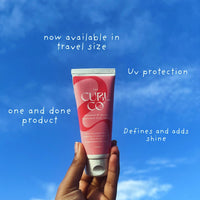
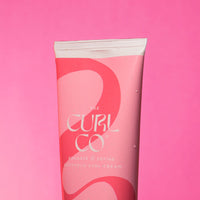
While the hair is still dripping wet, apply The Curl Co.'s Enhance and Define Softhold Curl Cream using the praying-hands method, smoothing it through the hair, then scrunching upward from the ends to encourage curl formation. On humid days or if you need longer-lasting hold, follow with The Curl Co.'s Volumize and Define Hydrating Curl Gel applied over the cream. The gel creates a protective cast around the curl pattern as it dries, locking out atmospheric moisture.
Dry using a microfibre towel or old T-shirt by scrunching, not rubbing. Air-dry completely or use a diffuser on low heat. Once the hair is fully dry, scrunch gently to break the cast and release soft, defined, frizz-controlled curls.
Quick Frizz Fixes for Bad Hair Days
Even with a consistent routine, Indian weather occasionally wins. When it does, these fixes work without starting over.
A curl refresher is the fastest option. Lightly mist the hair with water, apply a very small amount of curl cream to your palms, and scrunch it into the frizzy sections. This reactivates the existing product and rehydrates the curl pattern without a full rewash.
The Curl Co.'s Frizz Control and Shine Hair Serum is the most useful tool for mid-day frizz emergencies. A small amount applied to the palms and smoothed over the frizzy sections smooths the cuticle, adds shine, and creates a barrier against humidity that lasts through the rest of the day.
For evening refresh when curls have fully deflated, the pineapple method works well. Gather all the hair loosely at the very top of the head with a satin scrunchie, spritz lightly with water, and let the curls hang overnight. By morning they have regained volume and need only a gentle scrunch to wake up.
FAQs
1. Why does my curly hair frizz even after I condition it?
Conditioning alone may not be enough if you are using a sulphate shampoo that strips moisture before conditioning can restore it, or if you are applying products on damp rather than soaking wet hair. Switch to a sulphate-free shampoo and apply all styling products while the hair is dripping wet.
2. Why does my curly hair frizz in humidity but also in dry weather?
Humidity causes frizz by pushing moisture into a dehydrated hair strand unevenly. Dry weather causes frizz by pulling moisture out of the strand. Both situations indicate that the hair needs better moisture retention, which comes from using the right products and sealing them in with a gel or serum.
3. Does oil stop frizz in curly hair?
Oil can seal moisture into the hair strand, but only after water-based hydration has been applied first. Oil applied to dry, dehydrated curls does not hydrate them, it coats them. The sequence that works is hydration first with a conditioner or curl cream, then a lightweight oil or serum to seal.
4. How often should I wash curly hair to reduce frizz?
Most Indian curly-haired women do best washing every five to seven days. Washing more frequently strips natural oils and can actually increase frizz. Between washes, refresh curls with water and a small amount of curl cream or a dedicated refreshing spray.
5. Does frizz mean my curls are damaged?
Not necessarily. Frizz is most commonly a sign of dehydration rather than damage. If frizz is accompanied by breakage, uneven curl patterns, or hair that feels rough even when wet, damage may be a factor. If frizz is the only symptom, improving the hydration and sealing routine usually resolves it within a few weeks.
6. What is the best product for frizzy curly hair in India?
A combination of a sulphate-free shampoo, a hydrating conditioner, a curl cream applied on soaking wet hair, and a finishing serum for frizz control covers all the bases. The Curl Co.'s complete curl care range is designed specifically for Indian curl types and Indian weather conditions.
Final Word
Frizz is one of the most common and most misunderstood aspects of curly hair, and for Indian curly-haired women dealing with humidity, hard water, and dramatic seasonal changes, it is also one of the most persistent. But it is not permanent. With the right routine, the right products, and an understanding of what your hair is actually asking for, frizz becomes something you manage rather than something that manages you.
At The Curl Co., every product in the range is designed to work with the specific challenges that Indian weather and Indian water present to curly hair. Because your curls deserve a routine that works for where you actually live.