If someone had told us in 2016 that curls would one day be celebrated rather than corrected, we might have laughed. Back then, the beauty standard was clear: straight, sleek, pin-flat hair was the goal. Straighteners were essentials, blow-dries were routine, and curls were seen as something that needed to be fixed before stepping out. The good hair day, for most Indian women with natural texture, almost always meant a straight hair day.
Fast forward to 2026, and something has genuinely shifted. The fashion cycles have come around again, but the mindset around curly and wavy hair is completely different. And that is where curls finally win.
2016: What That Era Did to Curly Hair
Keratin treatments were everywhere. Every salon offered them, every advertisement moved in the same direction, from texture to straight. Heat styling was not occasional but daily. Straighteners were used on hair that had not recovered from the previous session, and the cumulative damage showed up as dryness, breakage, and weakened curl patterns.
Natural texture was rarely celebrated in mainstream Indian media. Curly hair, when it appeared at all, was framed as something requiring attention or correction. The message was consistent: straight hair is the standard, textured hair is the deviation. For a deeper look at what that era did to curly hair health, read The Curl Co.'s guide on why curly hair gets frizzy and how to fix it.
What Changed Between Then and Now
The shift built gradually, driven by social media, community, and products designed specifically for textured hair.
Social media gave Indian curly-haired women visibility they had never had before. Real women documenting their natural texture, sharing wash day routines, and showing what their hair looked like when cared for correctly created a reference point that mainstream media had never provided.
The Curly Girl Method introduced a vocabulary and framework: sulphate-free cleansing, generous conditioning, applying products on soaking wet hair, and avoiding heat. These principles produced visible results that grew the community with every photograph shared.
The emergence of Indian curly hair brands designed for Indian curl types, Indian hard water, and Indian seasonal conditions completed the picture. Products existed alongside education alongside community, and the three together created the conditions for a genuine shift.
2026: Same Era Vibes, Different Mindset

The silhouettes and colour palettes of the mid-2010s are having a moment again. But the hair mindset has not repeated.
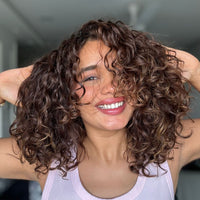
In 2026, curls are worn publicly in contexts where straightening would previously have felt mandatory. Job interviews. Workplace presentations. Wedding celebrations. Family photographs. The occasions that once required controlled, chemically altered hair are now being attended with natural texture that is well-cared-for and well-styled.
Frizz is increasingly understood rather than feared. The curly hair community has communicated clearly that frizz is almost always dehydration rather than damage, that it responds to the right products rather than to straightening, and that managing it does not require removing the curl.
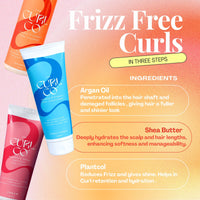
At The Curl Co., the Cleanse and Hydrate Curl Shampoo and Nourish and Hydrate Curl Conditioner were built for exactly this shift, for Indian women who have stopped asking their hair to be something it is not and started asking what it actually needs.
What the New Curl Routine Looks Like

A 2016 curly hair routine involved sulphate-heavy shampoo, minimal conditioning, brushing dry hair, and either straightening or putting it up.
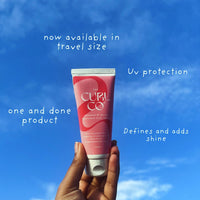
A 2026 routine looks different. Sulphate-free cleansing that cleans without stripping. The Enhance and Define Softhold Curl Cream applied on soaking wet hair to define the pattern as it dries. The Volumize and Defining Gel for Hydrating Curl layered over the cream to hold the pattern through the day. The Frizz Control and Shine Hair Serum to finish with shine and frizz protection. Hair dried completely before being touched. Cast scrunched out. Curls that look intentional rather than incidental.
The right routine depends on whether you have wavy or curly hair, and the amounts and techniques differ significantly between the two. For a complete breakdown of both textures and which products work best for each, read The Curl Co.'s guide on curly vs wavy hair and finding the right routine.
Why This Matters Beyond Hair
The woman who stops straightening her hair is not simply making a different styling choice. She is choosing not to participate in a daily ritual of correction premised on the idea that her natural hair was wrong. It matters that curly hair is being worn in professional settings without apology. It matters that younger Indian girls are growing up with more visible examples of natural texture worn confidently. It matters that the conversation has shifted from managing curly hair to caring for it.
FAQs
1. Why are curls finally being celebrated in 2026?
Social media visibility, community education, and India-made products designed for textured hair have changed both the knowledge available to curly-haired Indian women and their cultural permission to wear natural texture confidently.
2. What is the difference between the 2016 and 2026 approach to curly hair?
In 2016, the approach was correction through heat and chemicals. In 2026, it is understanding and supporting the natural curl pattern through sulphate-free cleansing, conditioning, and products designed for textured hair.
3. How do I start caring for my curly hair in 2026?
Start with a sulphate-free shampoo and a hydrating conditioner. Apply styling products on soaking wet hair. Allow the hair to dry completely without touching it. The Curl Co.'s range covers every step with products designed for Indian curl types and Indian weather.
4. What damage did the 2016 hair era cause to curly hair?
Repeated heat styling and chemical straightening caused cuticle damage, weakened curl patterns, increased porosity, and chronic dryness. Many Indian women are still rebuilding their natural curl pattern through consistent hydrating care.
5. Is frizz a sign that my curly hair is damaged?
Frizz is almost always dehydration rather than damage. The curly hair cuticle absorbs atmospheric moisture unevenly when dehydrated, creating frizz. Better conditioning and sealing products reduce frizz without heat or chemical treatment.
6. Where can I find curly hair products designed for Indian curls?
The Curl Co. offers a complete range of CG-friendly products for Indian curl types and Indian weather. Explore the complete product range for everything from cleansing through styling and finishing.
Final Word
2026 is not a perfect moment for curly hair in India. But it is meaningfully different from 2016, and that difference is real and worth acknowledging. At The Curl Co., we have always believed curls do not need correction. They need care, moisture, and understanding. More Indian women are arriving at the same conclusion, and we are glad to be part of the journey.